🌿 Introduction – The Soul of Thai Street Food
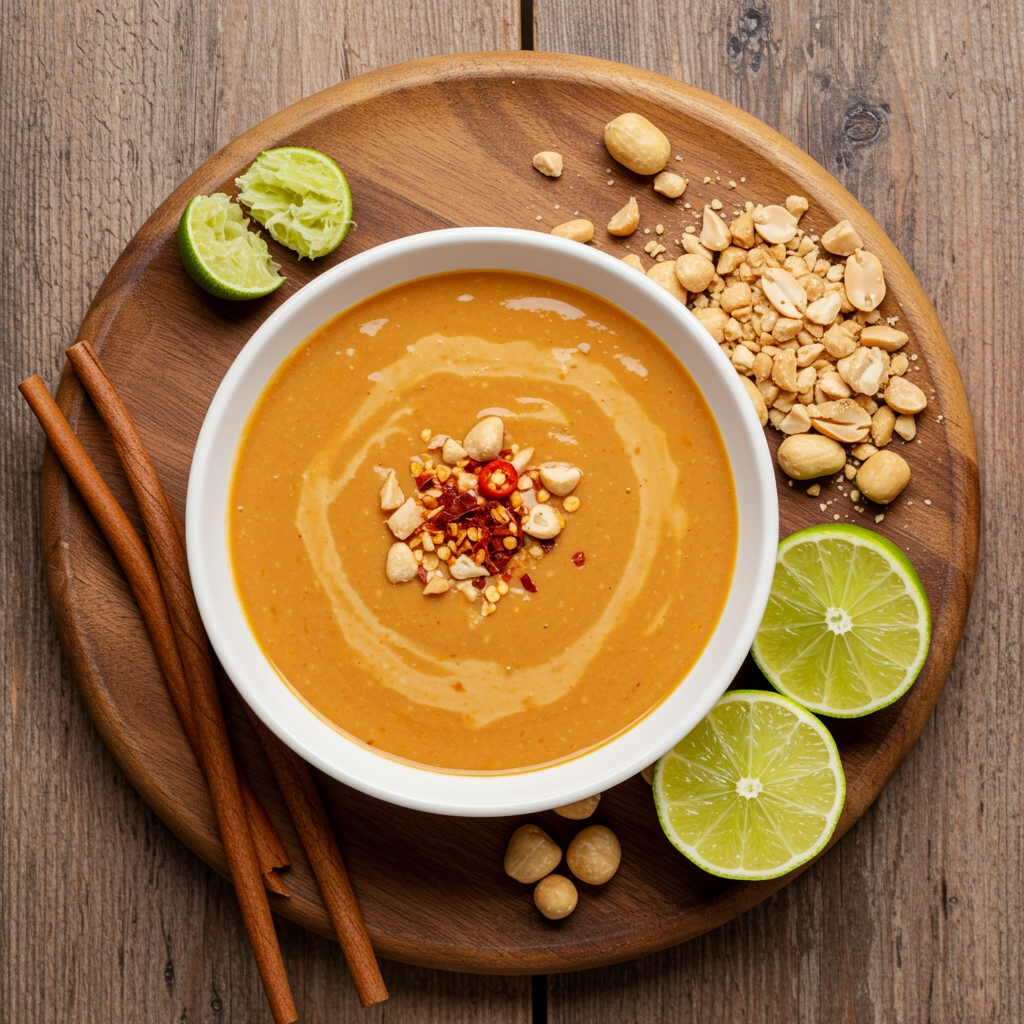
If there’s one flavor that instantly transports you to the bustling markets of Bangkok, it’s the creamy, nutty, spicy magic of Thai peanut sauce. In Thailand, this sauce is served with satay skewers, tossed into noodles, or drizzled over fresh rolls — the perfect balance of sweet, salty, spicy, and tangy that defines Thai cuisine.
Our vegan Thai peanut sauce keeps everything you love — the silky texture, the bold aroma, and the crave-worthy umami — while skipping animal-based ingredients like fish sauce or dairy. Instead, we build layers of flavor using peanut butter, coconut milk, tamari, lime juice, and maple syrup, creating a sauce that’s indulgent yet wholesome.
💚 Pair it with Vegan Teriyaki Sauce for a sweet-savory combo, or drizzle it alongside Vegan Fish Sauce Alternatives to deepen the umami.
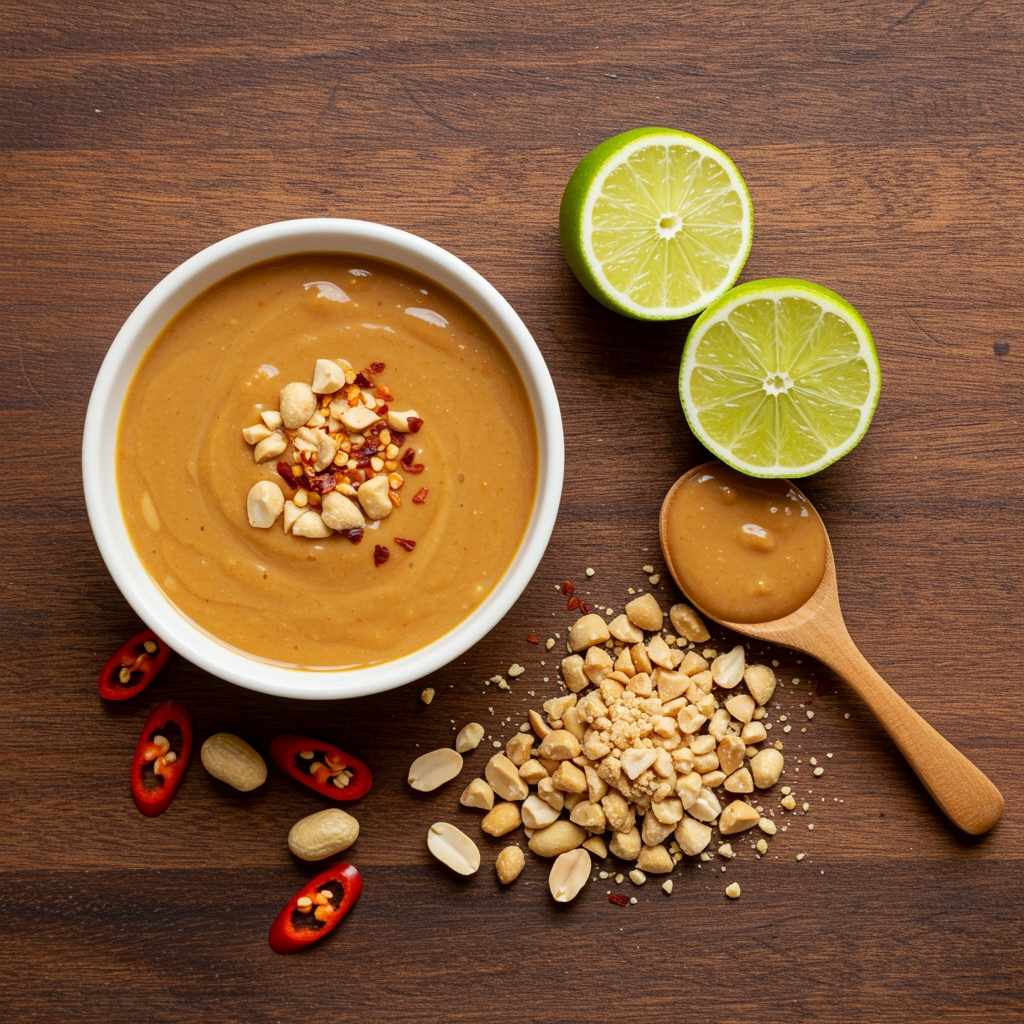
Vegan Thai Peanut Sauce
Ingredients
Equipment
Method
- In a medium bowl, whisk together the peanut butter and coconut milk until smooth and creamy.
- Add tamari, maple syrup, lime juice, rice vinegar, and minced garlic.
- Whisk again until fully combined.
- 💡 For authentic Thai depth, stir in a few drops of Vegan Fish Sauce Alternative
- Add chili flakes or a dash of sriracha to reach your desired spice level.
- Add 1 tablespoon of warm water at a time until the consistency suits your dish — thick for dipping, thinner for drizzling.
- Taste and adjust to your liking — add more lime juice for brightness, maple syrup for sweetness, or tamari for saltiness.
- Use immediately or store in a sealed jar in the refrigerator for up to 7 days.
- Shake or whisk before serving.
- 💚 Delicious on tofu skewers, noodles, or Buddha bowls.
Nutrition
Notes
- Storage: Keep refrigerated up to 1 week or freeze for 2 months.
-
Variations:
- Satay-Style: Add ½ tsp curry powder and chili paste.
- No-Coconut Version: Replace coconut milk with almond milk.
- Spicy Red Curry: Mix in 1 tbsp vegan Thai curry paste.
- Best Pairings:
Tried this recipe?
Let us know how it was!🧠 Why Peanut Sauce Is a Vegan Favorite
Thai peanut sauce is naturally plant-forward — its richness comes from nuts, not dairy. It’s:
- Protein-rich, thanks to peanuts.
- Dairy-free and gluten-free when using tamari.
- Balanced in all five Thai taste elements: sweet (maple), salty (tamari), sour (lime), spicy (chili), and creamy (coconut).
Whether you’re dipping crispy tofu, tossing rice noodles, or dressing a fresh papaya salad, this sauce elevates every bite.
⚖️ The Perfect Flavor Balance
True Thai flavor is about harmony, not dominance. Every spoonful should hit all the notes:
- Sweetness to soften the heat.
- Acidity to cut through the creaminess.
- Saltiness to bring depth.
- Spice to wake up the palate.
That’s why our version keeps ingredients in balance — no single note overwhelms the rest. Just like the balance in Vegan Curry Sauce or Vegan Sweet & Sour Sauce, this harmony is what makes the sauce unforgettable.
🧂 Key Ingredients in Vegan Thai Peanut Sauce
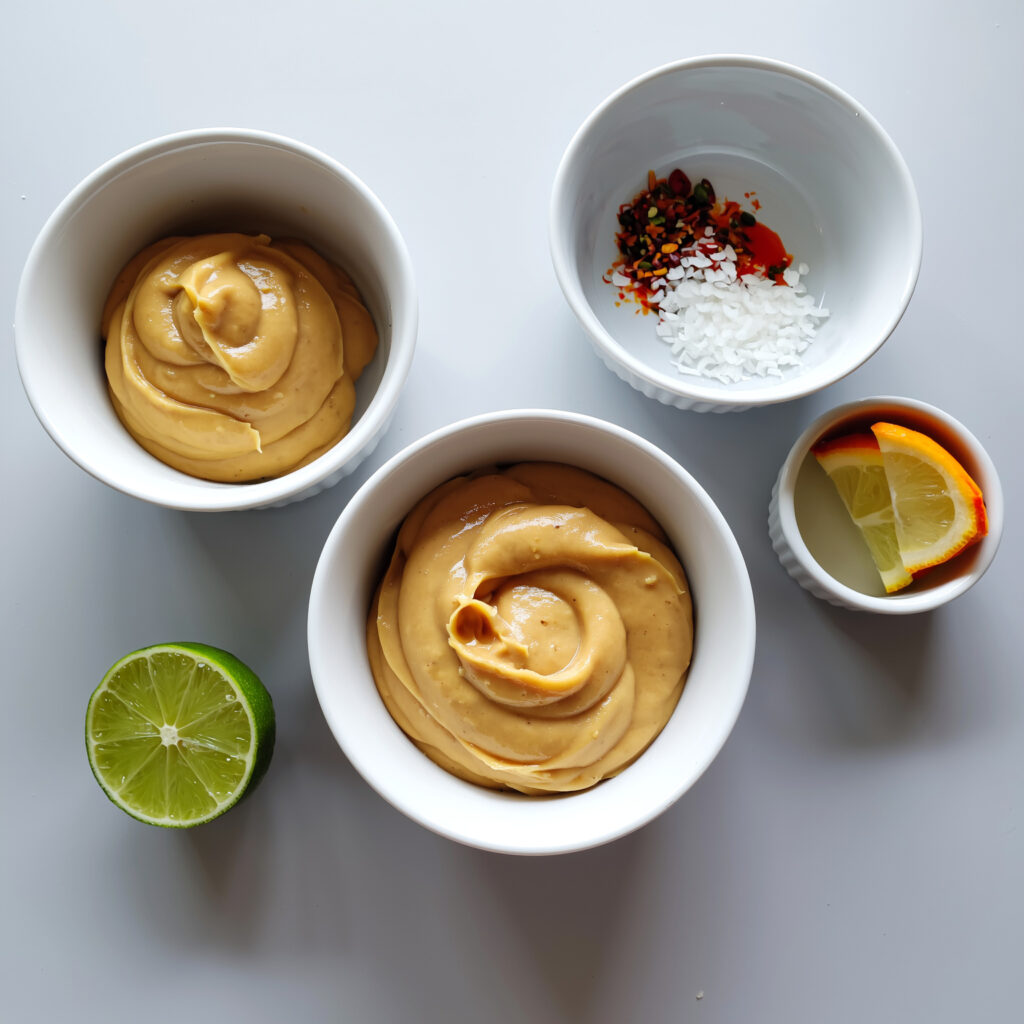
Each ingredient serves a purpose — together they create the unmistakable Thai profile that’s creamy, aromatic, and layered.
🥜 1. Peanut Butter – The Creamy Heart
This is the soul of the sauce. Choose unsweetened natural peanut butter — smooth for classic texture or chunky for rustic appeal. The oiliness helps emulsify and thicken the sauce naturally.
💡 Want a nut-free version? Substitute sunflower seed butter or tahini.
🥥 2. Coconut Milk – Natural Richness
Coconut milk brings the velvety body that makes Thai sauces irresistible. Use full-fat for dipping or light coconut milk for a dressing. It’s what gives our Vegan Curry Sauce its luxurious mouthfeel too.
🍋 3. Lime Juice & Rice Vinegar – Bright Acidity
Acidity is the secret weapon that keeps this sauce from feeling heavy. Lime adds tropical brightness, while rice vinegar introduces mild tang — both balancing the richness of peanuts and coconut.
💚 You can also experiment with tamarind paste for a sweet-sour twist, echoing Thai street recipes.
🧂 4. Tamari or Soy Sauce – Savory Umami
For saltiness and umami, tamari is the go-to base. It’s naturally gluten-free and has smoother depth than soy.
If you love complexity, mix in ½ teaspoon of Vegan Fish Sauce Alternative — it layers oceanic umami without animal ingredients.
🍯 5. Maple Syrup – Gentle Sweetness
Traditional Thai cooks use palm sugar. Our vegan update uses maple syrup, which dissolves easily and adds subtle caramel notes while keeping the sauce refined-sugar-free.
🌶️ 6. Garlic & Chili – The Thai Heat
Minced garlic and red chili flakes bring warmth and energy.
Use fresh Thai bird’s-eye chili for authentic heat, or mild sriracha for a balanced kick.
💡 In our Vegan Satay Sauce (coming next), these same aromatics form the base of the grilled-skewer experience — peanut sauce’s spicy cousin.
🥄 Flavor Equation: Your Perfect Balance
| Element | Flavor Source | Purpose |
|---|---|---|
| Creamy | Peanut butter + coconut milk | Texture & mouthfeel |
| Salty | Tamari | Depth & umami |
| Sour | Lime juice + vinegar | Brightness |
| Sweet | Maple syrup | Balance |
| Spicy | Chili flakes | Heat |
| Umami Boost | Vegan fish sauce alternative | Authentic Thai depth |
🍲 Core Recipe: How to Make Vegan Thai Peanut Sauce
🧾 Ingredients (Yields ≈ 350 ml of sauce)
- ½ cup natural peanut butter (unsweetened)
- ½ cup coconut milk (full-fat for thick sauce, light for dressing)
- 2 tbsp tamari (or soy sauce)
- 1 ½ tbsp maple syrup
- 1 tbsp lime juice (freshly squeezed)
- 1 tbsp rice vinegar
- 1 clove garlic, minced
- ½ tsp red chili flakes (adjust to taste)
- 2–3 tbsp warm water (to thin if needed)
- Optional: ½ tsp Vegan Fish Sauce Alternative for extra umami depth
🔥 Step-by-Step Instructions
Step 1: Whisk the Base
In a medium bowl, whisk together peanut butter and coconut milk until smooth and creamy.
This creates the body of the sauce — rich and silky.
💡 If your peanut butter is thick, microwave it for 10 seconds before mixing.
Step 2: Build the Flavor
Add tamari, maple syrup, lime juice, rice vinegar, and garlic. Whisk again until fully emulsified.
Each ingredient balances the others — sweet, salty, and tangy.
If you love layered umami, add a few drops of Vegan Fish Sauce Alternative here. It rounds out the flavor beautifully.
Step 3: Adjust the Heat
Stir in chili flakes or sriracha to reach your ideal spice level.
For mild sauce, start with ¼ teaspoon; for authentic Thai street heat, use a full teaspoon or a small chopped red chili.
Step 4: Thin the Sauce (Optional)
Add 1 tablespoon of warm water at a time until the consistency fits your use:
- Thick for dipping
- Medium for drizzling
- Thin for salad dressing or noodle bowls
Step 5: Taste & Perfect
Taste once — you should feel a burst of creamy, tangy, nutty, and spicy harmony.
Adjust salt (tamari), sweetness (maple), or acidity (lime) as needed.
🧊 Storage & Shelf Life
- Refrigerator: Up to 7 days in a sealed glass jar.
- Freezer: Up to 2 months in small containers or ice-cube trays.
- To Reheat: Warm on low heat or microwave in 10-second bursts, whisking to re-emulsify.
💚 It pairs perfectly with Vegan Curry Sauce in meal prep bowls or as a topping for Vegan Teriyaki Tofu.
🌏 Regional & Flavor Variations
🇹🇭 1. Classic Satay-Style Peanut Sauce
This version mimics the authentic nam jim satay — thicker and slightly spicier.
Add:
- ½ tsp curry powder
- ½ tsp chili paste (or sambal oelek)
- 1 extra tbsp coconut milk
Use for:
Dipping grilled tofu skewers, tempeh satay, or roasted cauliflower.
💡 Try alongside Vegan Satay Sauce — they’re complementary but distinct recipes.
🇮🇩 2. Spicy Red Curry Peanut Sauce (Indonesian Inspired)
Blend in 1 tbsp Thai red curry paste (ensure vegan-friendly) for a smoky, aromatic touch.
Use for:
Stir-fried noodles, rice bowls, or spring rolls.
💚 Mix this with a spoon of Vegan Curry Sauce for a thick, aromatic dip — perfect fusion flavor.
🌿 3. Light, No-Coconut Version
For a lower-fat or allergy-friendly version:
Replace coconut milk with unsweetened almond milk or water + 1 tsp sesame oil.
Use for:
Fresh salads, cold soba noodles, or light summer rolls.
🍜 How to Use Vegan Thai Peanut Sauce
This sauce is as versatile as it is delicious. Whether warm or chilled, it adds a creamy, nutty richness that elevates even the simplest dish.
🥢 1. As a Dipping Sauce
Perfect for:
- Spring rolls
- Tofu skewers
- Fresh veggie platters
💡 Combine it with Vegan Dumpling Dipping Sauce for a dynamic duo of sweet-spicy and salty-tangy flavor.
🍛 2. With Noodles & Stir-Fries
Toss with:
- Rice noodles or soba
- Stir-fried broccoli, bell peppers, or carrots
- Crispy tofu or tempeh
💚 For a flavor explosion, mix ½ tbsp Vegan Teriyaki Sauce + 1 tbsp Peanut Sauce — the sweet and creamy contrast is divine.
🥗 3. In Bowls & Salads
Use as a creamy dressing for Buddha bowls or salads.
Try this combo:
- Quinoa or rice base
- Roasted veggies
- Fresh cucumber and cilantro
- Generous drizzle of peanut sauce
It also makes a delicious pairing with Vegan Sweet & Sour Sauce for a two-tone dressing aesthetic.
🍢 4. As a Marinade or Glaze
Mix equal parts peanut sauce and water, and brush over tempeh, tofu, or roasted vegetables before baking or grilling.
It caramelizes beautifully — sticky, nutty, and perfectly golden.
🧄 Pro Tips from Ava (Yumgan Chef)
- Always whisk before serving — peanut butter can separate naturally.
- For a restaurant-style finish, top with crushed roasted peanuts and a squeeze of lime.
- To balance heat, add a splash of Vegan Fish Sauce Alternative instead of extra salt — it’s more flavorful.
🥦 Nutritional Benefits of Vegan Thai Peanut Sauce
Besides its irresistible taste, this sauce delivers serious nutrition:
- Healthy fats: Peanuts and coconut milk provide monounsaturated fats that support heart health.
- Plant protein: A 2-tablespoon serving gives about 4 grams of protein.
- Micronutrients: Rich in magnesium, vitamin E, and potassium.
- No cholesterol & dairy-free: 100 % plant-based comfort food.
- Natural energy: The combo of good fats + carbs offers sustained fuel — perfect post-workout.
💚 For lighter meals, mix one part peanut sauce with one part water and drizzle over steamed veggies — or blend it with Vegan Curry Sauce for a nutrient-dense dressing.
Frequently Asked Questions (FAQs)
Is Thai peanut sauce vegan?
Traditional versions often include fish sauce. This recipe replaces it with Vegan Fish Sauce Alternative — delivering the same umami, no animals involved.
What can I use instead of peanut butter?
Try almond butter or tahini for a nut-free or flavor-shifted option. Adjust coconut milk to maintain creaminess.
How long does vegan peanut sauce last?
Up to 7 days in the fridge in a sealed jar, or 2 months frozen. Whisk before re-using to re-emulsify.
Is this gluten-free?
Yes — as long as you use tamari instead of soy sauce and check that your curry paste is certified GF.
Can I serve it warm or cold?
Both! Serve warm for satay and stir-fries; serve chilled for salads and fresh rolls.
Pair it with Vegan Teriyaki Sauce for hot bowls or Vegan Sweet & Sour Sauce for cold fusion dishes.
What if my sauce gets too thick?
Add 1 tbsp warm water at a time while whisking. A splash of lime juice also refreshes the flavor.
🌿 Conclusion — The Flavor of Thailand in Every Spoon
This vegan Thai peanut sauce embodies the essence of Thai cooking — balance, boldness, and comfort.
From satay skewers to noodle bowls, it turns any meal into a journey through Southeast Asia.
At Yumgan, we believe in flavor without compromise — sustainably sourced, compassionately crafted, and unmistakably delicious.
Discover the complete 🌏 Asian Vegan Sauces Collection:
Together, they form the foundation of your plant-based pantry — global flavor made simple.